

- admin
What Drivers Should Know Before Scheduling Fluid Service in New York
Drivers should understand which vehicle fluids require regular checks, how driving patterns affect fluid condition, why proper scheduling matters, and how mobile services offer convenience for busy city residents. Knowing these details helps prevent breakdowns, maintain engine performance, and extend vehicle lifespan in challenging urban driving environments.
Many drivers in New York face unique conditions, including stop-and-go traffic, rapid temperature swings, short commutes, and extended periods of idling. Choosing a Fluid Service New York provider helps ensure that essential fluids remain clean, functional, and properly leveled. Understanding how fluid service works, and why it matters in this region, helps drivers make smarter maintenance decisions that support long-term vehicle reliability.
Why Fluid Service Matters in New York’s Driving Conditions
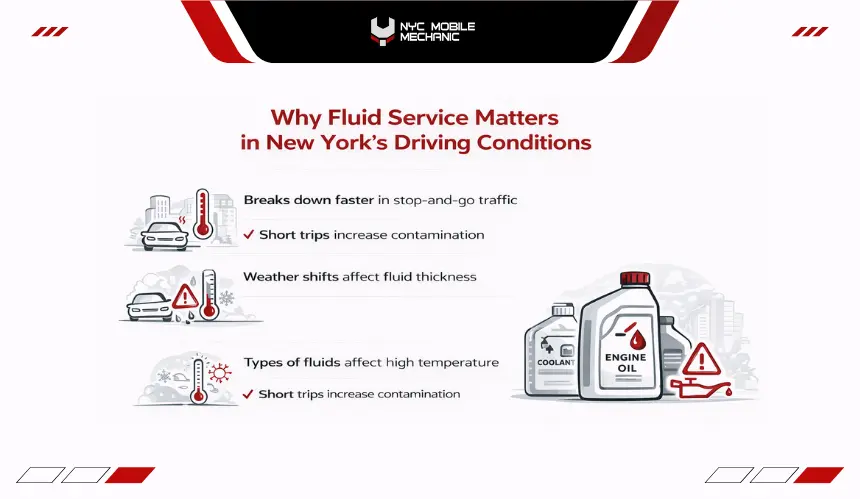
Vehicle fluids break down faster in environments marked by constant traffic, frequent braking, and frequent temperature fluctuations. These conditions accelerate wear on critical components that depend on stable lubrication, cooling, and hydraulic pressure. Fluid service ensures that every system continues to operate safely and efficiently.
How Do New York Driving Habits Affect Fluid Performance?
New York vehicles often experience short trips, long idle periods, and slow movement through crowded streets. These conditions prevent engines from reaching full operating temperature, allowing moisture and contaminants to accumulate in the fluids. Over time, this leads to reduced lubrication, increased wear, and compromised system performance.
Tip: Engines driven mainly on short trips often require more frequent oil and fluid checks.
Why Are Extreme Weather Shifts a Factor?
Seasonal temperature changes in New York affect fluid thickness and performance. Cold temperatures thicken engine oil, while summer heat thins transmission and coolant fluids. These variations impact how effectively fluids protect internal components, making scheduled service essential for maintaining reliable operation across varying weather conditions.
Types of Fluids Most New York Drivers Often Overlook
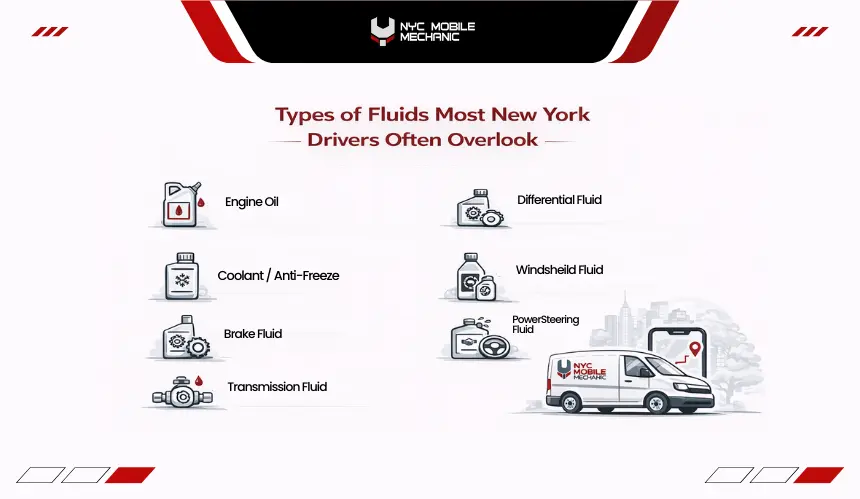
Many drivers are familiar with oil changes, but several important fluids require routine inspection and replacement. Neglecting them can lead to noise, overheating, erratic shifting, brake failure, or costly repairs that could have been avoided with simple maintenance.
What Fluids Are Included in Standard Fluid Service?
Standard fluid service typically includes checking and topping off multiple fluids essential for safe operation. These commonly include:
• Engine oil
• Coolant/antifreeze
• Brake fluid
• Transmission fluid
• Power steering fluid
• Windshield washer fluid
• Differential fluid
Each fluid supports different components and must remain clean and properly leveled for optimal performance.
Why Do These Fluids Degrade Faster in Urban Environments?
Stop-and-go conditions cause repeated heating and cooling cycles, which break down fluid additives and reduce viscosity. Dust, debris, and moisture can also enter through vents and seals. These factors combine to significantly shorten fluid lifespan, especially in high-traffic urban areas where vehicles rarely operate at consistent speeds.
What to Expect During a Professional Fluid Service Appointment
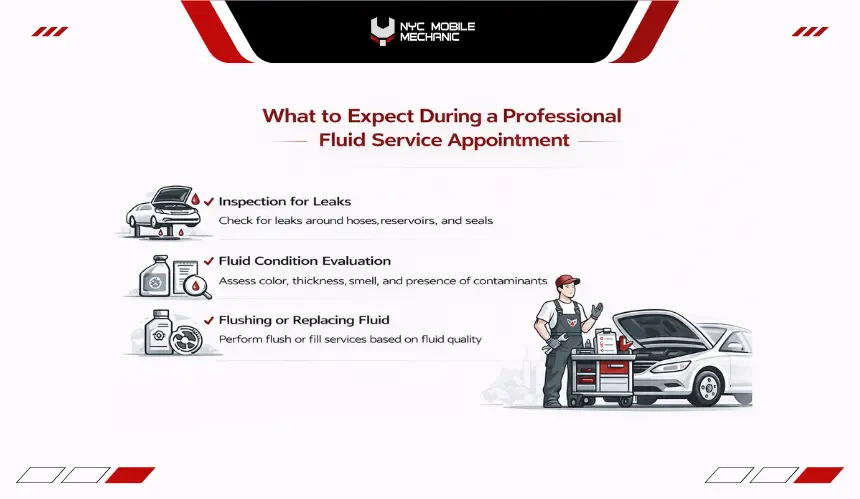
Fluid service involves more than simply topping off reservoirs. Professional technicians inspect for leaks, check component condition, evaluate fluid color and thickness, and determine whether a complete flush or replacement is needed.
How Do Technicians Evaluate Fluid Condition?
Professionals look for signs such as dark coloration, burnt smell, unusual thickness, or visible debris. Each indicator helps determine whether fluid has lost protective effectiveness. Technicians also examine hoses, reservoirs, and seals for early signs of deterioration to ensure no future leaks compromise the vehicle’s performance.
Note: Color alone is not always an accurate indicator, so technicians use multiple evaluation methods.
Why Is a Fluid Flush Sometimes Better Than a Simple Top-Off?
Top-offs only add new fluid to an existing mixture that may already contain contaminants. A full flush replaces all old fluid, restoring optimal system performance and reducing long-term wear. Vehicles that operate in heavy traffic or harsh climates often benefit from periodic fluid flushes to maintain proper mechanical function.
Advantages of Choosing Mobile Fluid Service in New York
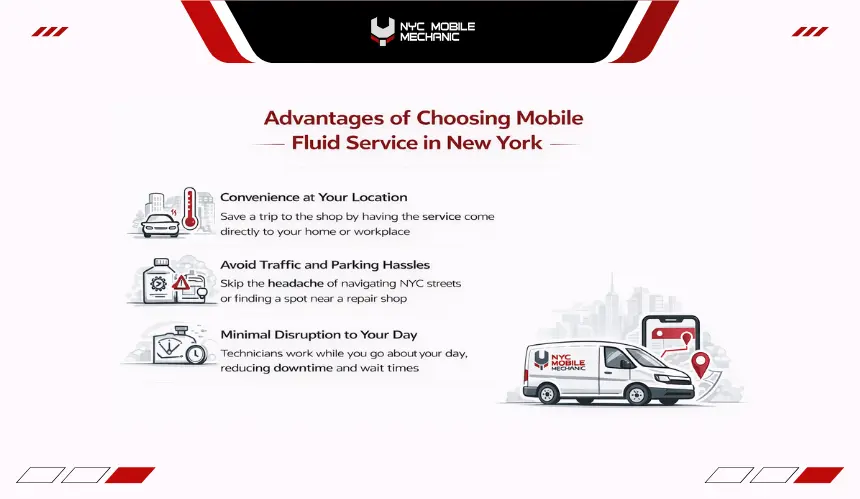
Mobile services bring convenience to an environment where travel time, parking limitations, and scheduling challenges often complicate routine maintenance. By eliminating the need to visit a shop, mobile services allow drivers to receive essential care wherever their vehicle is parked.
How Does Mobile Service Save Time for New York Drivers?
Instead of navigating traffic or searching for parking near a repair shop, drivers can schedule a mobile appointment at home, work, or any authorized location. Technicians arrive with the necessary tools and perform the service on-site. This eliminates downtime and supports more consistent maintenance scheduling.
Tip: Mobile fluid service reduces the likelihood of postponing maintenance due to busy schedules.
Is Mobile Fluid Service as Effective as a Shop Visit?
Yes. Mobile mechanics carry professional-grade equipment and follow the same procedures used in traditional repair shops. The difference lies in convenience, not quality. Mobile service often provides even more transparency, since technicians work directly in view of the vehicle owner and explain findings as they go.
Frequently Asked Questions
Do all vehicles need fluid service at the same intervals?
No. Service intervals depend on driving habits, climate, mileage, and manufacturer recommendations.
Are fluid flushes necessary, or are top-offs enough?
Flushes are necessary when fluids are contaminated or degraded. Top-offs help maintain levels but do not replace old fluid.
How often should fluids be checked in New York traffic conditions?
Many fluids should be inspected at least every 5,000–7,000 miles due to heavy traffic and stop-and-go driving.
Can mobile mechanics perform fluid service in parking garages?
Often, yes, but height limits and building rules should be checked before scheduling.
What are the signs that fluid service is overdue?
Common signs include burning smells, overheating, difficulty shifting, noisy steering, or dashboard warning lights.
Does fluid service improve fuel efficiency?
Yes. Clean fluids reduce engine strain, helping vehicles operate more efficiently.
Final Thoughts
Fluid service plays a key role in keeping vehicles reliable, safe, and responsive. Choosing a Fluid Service New York provider helps drivers maintain stability across changing seasons, heavy traffic, and demanding urban conditions. Understanding which fluids need attention, and how often, helps prevent costly repairs while extending the life of crucial components.
For drivers seeking dependable, on-site maintenance across New York, NYC Mobile Mechanics provides comprehensive mobile fluid services designed to support busy schedules, reduce downtime, and keep vehicles performing at their best.